

In the realm of solar energy systems, the choice of cables is crucial for ensuring the efficiency, safety, and longevity of the entire setup. As a leading supplier of the h1z2z2 - k solar cable, I often receive inquiries about its breaking strength. In this blog post, I'll delve into the concept of breaking strength, explain why it matters for h1z2z2 - k solar cables, and provide you with the key details you need to know.
Understanding Breaking Strength
Breaking strength, also known as tensile strength, is a fundamental mechanical property of materials. It refers to the maximum amount of tensile stress that a material can withstand before it fractures or breaks. In the context of h1z2z2 - k solar cables, breaking strength is a critical parameter because these cables are often subjected to various mechanical forces during installation, operation, and maintenance.
For example, during the installation process, solar cables may need to be pulled through conduits, around corners, or over long distances. This pulling action creates tension in the cable, and if the cable's breaking strength is insufficient, it may break, leading to costly repairs and system downtime. Similarly, in outdoor solar installations, cables are exposed to environmental factors such as wind, snow, and ice, which can exert additional mechanical stress on the cables. A cable with a high breaking strength is more likely to withstand these external forces without failing.
Factors Affecting the Breaking Strength of h1z2z2 - k Solar Cables
Several factors can influence the breaking strength of h1z2z2 - k solar cables. Let's take a closer look at some of the most important ones:
1. Conductor Material
The conductor is the core part of the cable that carries the electrical current. In h1z2z2 - k solar cables, the most common conductor material is copper due to its excellent electrical conductivity. Copper conductors generally have high tensile strength, which contributes to the overall breaking strength of the cable. The purity and quality of the copper also play a role; higher - purity copper tends to have better mechanical properties and higher breaking strength.
2. Conductor Cross - Sectional Area
The cross - sectional area of the conductor is another important factor. A larger cross - sectional area means more material is available to resist the tensile forces. For instance, a [Solar Cable 4mm2](https://www.example.com/solar - cable/h1z2z2 - k - solar - cable/solar - cable - 4mm2.html) will generally have a higher breaking strength than a cable with a smaller cross - sectional area, all other factors being equal. This is because the larger cross - section can distribute the stress more evenly across the conductor, reducing the likelihood of localized failure.
3. Insulation and Sheathing Materials
The insulation and sheathing of the h1z2z2 - k solar cable also contribute to its breaking strength. These materials not only protect the conductor from environmental factors but also add mechanical support. High - quality insulation and sheathing materials, such as cross - linked polyethylene (XLPE), are known for their good mechanical properties, including high tensile strength. They can help to hold the cable together under stress and prevent the conductor from being damaged.
4. Cable Construction
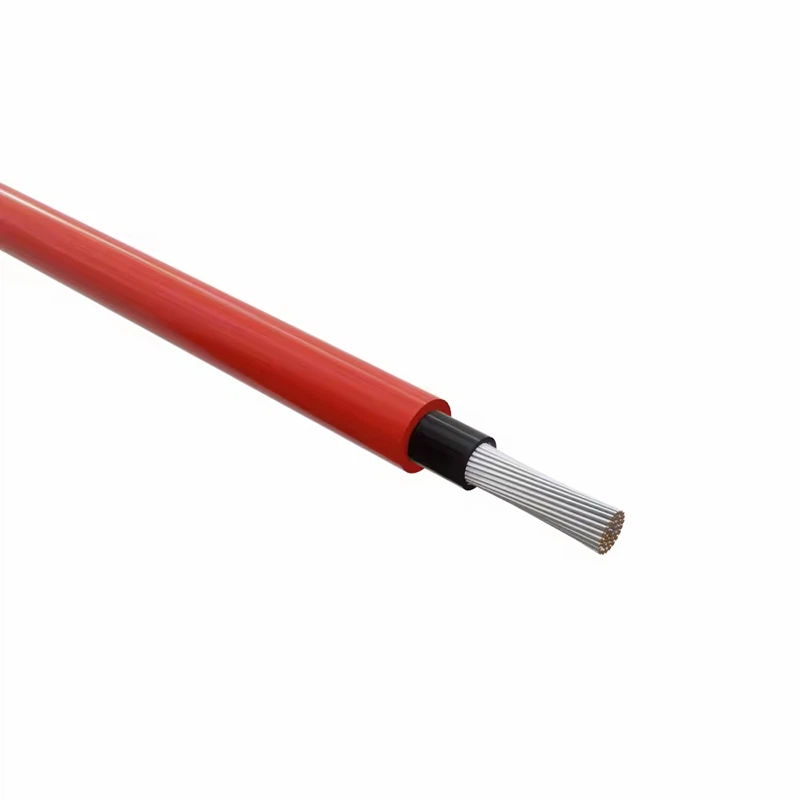
The way the cable is constructed can significantly impact its breaking strength. For example, multi - stranded conductors are often used in h1z2z2 - k solar cables. Multi - stranded conductors are more flexible than solid conductors, which is beneficial for installation. Additionally, the stranded structure distributes the stress more evenly among the individual strands, increasing the overall breaking strength of the cable.
Testing the Breaking Strength of h1z2z2 - k Solar Cables
To ensure the reliability of our h1z2z2 - k solar cables, we conduct rigorous testing to determine their breaking strength. The most common test method is the tensile test, which involves applying a gradually increasing tensile force to a sample of the cable until it breaks. The maximum force applied at the point of breakage is recorded as the breaking strength of the cable.
During the tensile test, the cable sample is carefully prepared to ensure accurate results. It is usually cut to a specific length and clamped securely at both ends. The test is carried out using a testing machine that can apply the force precisely and measure the resulting stress. The results of these tests are used to verify that our cables meet or exceed the industry standards for breaking strength.
Importance of High Breaking Strength in Solar Applications
In solar energy systems, a high breaking strength of h1z2z2 - k solar cables offers several benefits:
1. Installation Reliability
As mentioned earlier, during installation, cables are often pulled and maneuvered. A cable with high breaking strength can withstand the installation forces without breaking, reducing the risk of installation - related failures. This ensures a smooth and efficient installation process, saving time and labor costs.
2. Long - Term Durability
Solar energy systems are designed to operate for many years. Over time, the cables are exposed to various environmental and mechanical stresses. A cable with high breaking strength is more likely to remain intact and functional throughout the lifespan of the system, reducing the need for frequent cable replacements and maintenance.
3. Safety
In the event of a mechanical shock or extreme environmental conditions, a cable with low breaking strength may break, which can lead to electrical shorts, fires, or other safety hazards. High - strength cables provide an extra layer of safety by minimizing the risk of cable breakage and the associated electrical problems.
Our h1z2z2 - k Solar Cable Product Range
We offer a wide range of h1z2z2 - k solar cables to meet the diverse needs of our customers. Our [DC Solar Photovoltaic Cable](https://www.example.com/solar - cable/h1z2z2 - k - solar - cable/dc - solar - photovoltaic - cable.html) is designed for direct - current applications in solar energy systems. It features high - quality copper conductors and robust insulation and sheathing materials, ensuring excellent electrical performance and high breaking strength.
Our [Single Core Solar Photovoltaic Cable](https://www.example.com/solar - cable/h1z2z2 - k - solar - cable/single - core - solar - photovoltaic - cable.html) is another popular option. It is suitable for applications where a single - conductor cable is required, such as in small - scale solar installations. The single - core design provides a simple and cost - effective solution while still maintaining high breaking strength and reliability.
Contact Us for Purchase and Consultation
If you are interested in our h1z2z2 - k solar cables or have any questions about their breaking strength or other properties, we encourage you to contact us. Our team of experts is ready to provide you with detailed information, technical support, and customized solutions to meet your specific requirements. Whether you are a solar installer, system integrator, or end - user, we can help you find the right cable for your solar energy project.

References
- International Electrotechnical Commission (IEC) standards for solar cables.
- Technical literature on copper conductors and their mechanical properties.
- Research papers on the performance of insulation and sheathing materials in solar cables.