

Single Core Cable Manufacturer & Supplier — UL Electronic Wire & CCC Building Wire Factory
Hangzhou Jilong Sensing Special Cable Factory (brand: TIANHE JILONG / TianHeJiLong) is a single core cable manufacturer and supplier in Lin'an, Hangzhou, Zhejiang. We produce two families of single-core wire end-to-end on our own lines: UL electronic cable (UL 1007 / UL 1015 / UL 1061, tinned copper, 300–600 V) and CCC building wire (BV / RV series, 450/750 V, IEC 60227).
As a factory — not a trading company — we control every step: copper drawing, tinning, stranding, PVC extrusion and 100% spark & voltage testing. UL style numbers are printed on the jacket; RoHS compliance documents ship with every order.
B2B buyers — appliance OEMs, instrument makers, panel builders, electrical contractors and cable distributors — source 28 AWG to 6 mm² from us with MOQ from 3,000 m, free samples and OEM printing direct from the factory.

Two Single Core Cable Families — Pick Yours First
The fastest way to source correctly is to match certification + voltage to your market. Both families below are produced in-house with bare or tinned copper conductors, PVC insulation, and full customization of color, print and packaging:


UL Electronic Cable — Style Selection Guide
Not sure which UL Style fits your appliance or device? The rule of thumb is voltage first, temperature second, size third:
| UL Style | Rated voltage | Temp. | Typical use |
|---|---|---|---|
| UL 1007 | 300 V | 80°C | Internal wiring of home appliances and electronics |
| UL 1015 | 600 V | 80°C | Panel and control equipment wiring, higher voltage points |
| UL 1061 | 300 V | 80°C | Instruments, meters, thin-wall tight-space wiring (24–26 AWG) |
Common AWG builds we stock: UL 1007 18 AWG (24×0.2 mm, OD 1.95 mm, max 27 Ω/km), UL 1015 18 AWG (41×0.16 mm, OD 2.8 mm), UL 1061 24 AWG (7×0.15 mm, OD 1.0 mm). Full data sheets come with the quotation.

CCC Building Wire — BV, RV and IEC 60227 Constructions
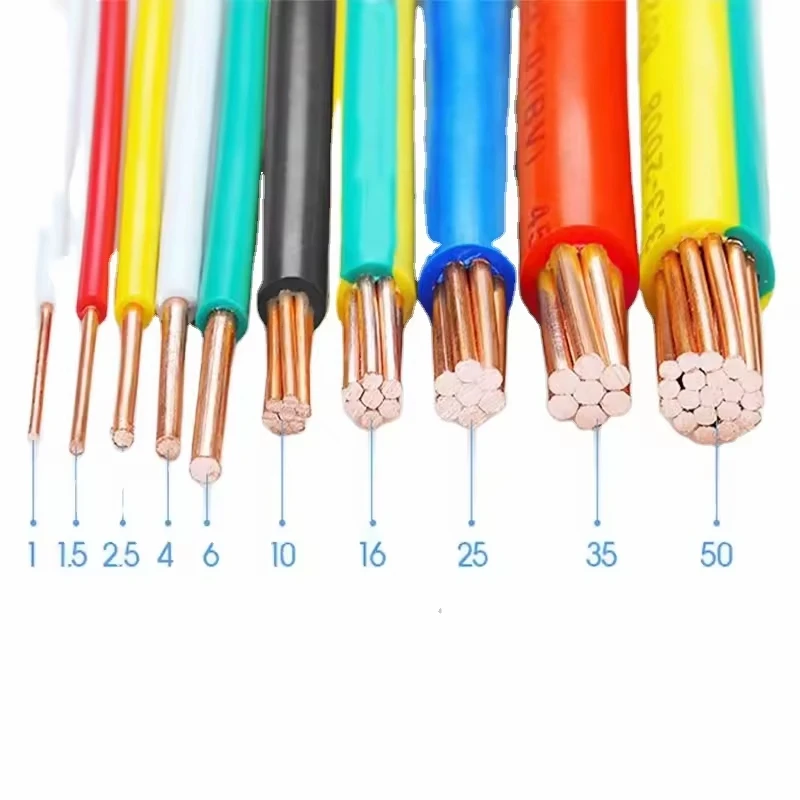
For construction, panels and general equipment wiring we produce the IEC 60227 (GB 5023) family under CCC and CE certification:
BV — solid copper, 450/750 V. Example: BV 1.5 mm² (1.36 mm solid conductor, max 13.3 Ω/km, OD 3.3 mm, −20 to +70°C). Rigid, easy to terminate, standard for fixed installation inside conduits.
RV — stranded copper, 450/750 V. Example: RV 1.5 mm² (30×0.25 mm, OD 3.1 mm). Flexible version for moving parts, distribution boxes and equipment internal wiring.
Colors: red, yellow, blue, green/yellow (earth), black, white and dual-color builds on request. Both BV and RV carry CCC + CE marks and RoHS reports.
-
![UL Certified Electrical Cable]() UL Certified Electrical CableBV is a general-purpose single core hard conductor unshielded cable. BV cables have a wide range of applications in the field of industrial power distribution, and can be used for the fixed laying ofread more
-
![UL 1007 Electronic Cable]() UL 1007 Electronic CableBV is a general-purpose single core hard conductor unshielded cable. BV cables have a wide range of applications in the field of industrial power distribution, and can be used for the fixed laying ofread more
-
![UL 1007 For Home Appliance]() UL 1007 For Home ApplianceBV is a general-purpose single core hard conductor unshielded cable. BV cables have a wide range of applications in the field of industrial power distribution, and can be used for the fixed laying ofread more
-
![UL 1007 22AWG Cable]() UL 1007 22AWG CableBV is a general-purpose single core hard conductor unshielded cable. BV cables have a wide range of applications in the field of industrial power distribution, and can be used for the fixed laying ofread more
-
![UL 1061 24AWG Cable]() UL 1061 24AWG CableBV cable, also known as copper core polyvinyl chloride insulated cloth wire, is a common type of cable. Its structure is simple, consisting of a conductor and an insulation layer, where the conductorread more
-
![UL 1061 Electronic Cable]() UL 1061 Electronic CableBV cable, also known as copper core polyvinyl chloride insulated cloth wire, is a common type of cable. Its structure is simple, consisting of a conductor and an insulation layer, where the conductorread more
-
![Tinned Copper PV Wire]() Tinned Copper PV WireBV cable, also known as copper core polyvinyl chloride insulated cloth wire, is a common type of cable. Its structure is simple, consisting of a conductor and an insulation layer, where the conductorread more
-
![UL 1015 Electronic Cable]() UL 1015 Electronic CablePhotovoltaic cables are mainly used in solar photovoltaic power generation systems to connect solar panels, inverters, power grids, and other equipment. It plays an important role in transmittingread more
-
![UL 1015 20AWG Cable]() UL 1015 20AWG CablePhotovoltaic cables are mainly used in solar photovoltaic power generation systems to connect solar panels, inverters, power grids, and other equipment. It plays an important role in transmittingread more
-
![Ul Electronics Certification]() Ul Electronics CertificationPhotovoltaic cables are mainly used in solar photovoltaic power generation systems to connect solar panels, inverters, power grids, and other equipment. It plays an important role in transmittingread more
-
![Ul Cable Types]() Ul Cable TypesPhotovoltaic cables are mainly used in solar photovoltaic power generation systems to connect solar panels, inverters, power grids, and other equipment. It plays an important role in transmittingread more
-
![UL Single Core Cable]() UL Single Core CablePhotovoltaic cables are mainly used in solar photovoltaic power generation systems to connect solar panels, inverters, power grids, and other equipment. It plays an important role in transmittingread more


8 Problems B2B Buyers Run Into With Single Core Wire — And What They Actually Cost You
These are the recurring issues our OEM and contractor customers raise before switching to us. If you buy electronic wire or building wire in volume, you will recognize several:
| The problem you meet | What it costs you | How we fix it |
|---|---|---|
| 1. UL file does not match the shipment — the reel says UL 1007 but the style, AWG or voltage on the UL file page differs, and your customer's incoming audit fails. | Rejected batches, line-down at your assembly plant, failed vendor audits. | UL style number, AWG and voltage printed on every jacket; UL file number shared with the quotation so your audit team can verify before ordering. |
| 2. Conductor substituted — copper-clad aluminum or recycled copper sold as "tinned copper"; resistance readings drift and joints overheat. | Fire risk, warranty claims, recalls on finished appliances. | 100% virgin electrolytic copper, tinned in-house; conductor resistance tested per reel — UL 1007 18 AWG guaranteed max 27 Ω/km at 20°C. |
| 3. AWG vs mm² confusion — you order "1.5 mm" thinking UL, get a CCC metric build, and the wire does not fit your terminals. | Scrap reels, delayed production, re-booking freight. | Our sales engineers confirm AWG/mm², stranding (e.g. 24×0.20 vs 30×0.25) and OD against your terminal drawings before quoting. |
| 4. Color drift between batches — red from batch 1 does not match red from batch 3; harnesses look patched. | Visible quality complaints, rework at your harness shop. | One PVC compounding line, color kept to a master-batch standard; color samples approved once and locked per contract. |
| 5. Missing RoHS / REACH papers for the EU — goods arrive but customs or your B2B customer asks for compliance documents you do not have. | Customs holds, blocked invoices, delisting from your customer's approved vendor list. | RoHS-compliant PVC compounds; test reports issued with each order, CE available on request. |
| 6. 20 colors × 5 sizes = a logistics nightmare — small mixed orders refused or repriced by traders. | Over-stocking one size while another runs out; cash tied up. | Factory-direct mixed loading: colors and sizes can be combined on one order from 3,000 m MOQ per item. |
| 7. Delivery slips against your production plan — appliance lines are scheduled to the hour; cable arrives a week late. | Overtime costs, expedited air freight, penalties from your OEM customer. | 15 production lines dedicated to wire & cable; standard builds in stock ship in 3–5 days, custom in 7–10 days. |
| 8. Packaging not export-ready — coils arrive in flimsy cartons, crushed reels, no pallets; inspection and unpacking eat a full day. | Damaged goods, slow receiving, labor claims. | Export packing as standard: 100/300/500 m coils in cartons, palletized or wooden-crated (ISPM-15), labeled per your SKU system. |
Our Solutions — Engineered Answers, Not Brochure Words
Bare and tinned copper drawn in-house — no bought-in semi-finished wire. Stranding builds from 7×0.127 (UL 1015 28 AWG) to 30×0.25 mm (RV 1.5 mm²); every reel gets a resistance test with the value recorded.
UL file numbers, CCC certificates, CE and RoHS reports are attached to the quotation. For appliance OEMs we also support UL-style label requirements and bar-coded reel labels matching your ERP.
Your logo, part number and meter marks printed on the jacket; wall thickness, OD tolerance and color matched to your drawing. Stripped-and-tinned ends and cut-to-length harness supply on request.
One order can combine UL 1007 / 1015 / 1061 with BV / RV reels — sizes and colors mixed — packed coil-in-carton, then palletized. One B/L, one customs entry, one receiving session at your warehouse.
Standard builds in stock ship in 3–5 days; custom extrusion in 7–10 days. Weekly production photos sent while your order runs — the same reporting our US and Korean customers already rely on.
ISO 9001 workflow from copper intake to finished test: spark testing inline, 100% voltage withstand, insulation resistance sampling. Reel tags carry batch ID so any claim traces back to the exact extrusion run.
Inside the Factory — From Copper Rod to Finished Reel
Single core wire is simple in structure but unforgiving in process: conductor quality and insulation concentricity decide everything. Here is how we make it, step by step:


Quality Control — Every Reel Tested Before It Ships

Governed by an ISO 9001 quality system, our lab and line-side checks cover the tests that matter for single core wire:
✔ Conductor resistance — max values per UL/IEC table verified on every reel (e.g. UL 1007 18 AWG ≤ 27 Ω/km, BV 1.5 mm² ≤ 13.3 Ω/km)
✔ Voltage withstand & spark test — 100% inline, catching pinholes traders never see
✔ Insulation thickness & OD — laser gauge inline + manual cross-section checks
✔ Print adhesion & legibility — UL style print must survive handling
✔ RoHS sampling — periodic third-party verification of PVC compounds
Certificates on File — UL, CE, CCC, RoHS, ISO 9001
Certification copies are shared at quotation stage — before money moves. Our certificate wall includes UL styles for electronic wire, CCC for building wire, CE for EU destinations and the ISO 9001 system certificate:


Who Buys Our Single Core Cable — 8 Buyer Profiles
Different buyers ask different first questions. Find your profile below — it tells you what we ship and what to include in your inquiry:
Buys UL 1007 / 1015 for internal wiring of heaters, fans, pumps and white goods. First question: "Can you match our UL file and print our part number?"
Buys UL 1061 24–26 AWG thin-wall wire for panel and PCB-level wiring. First question: "What is your minimum OD tolerance on 24 AWG?"
Buys RV 1.5–6 mm² flexible wire and UL 1015 600 V for control cabinets. First question: "Colors and meter marks per our wiring diagram?"
Buys BV building wire 1.5–6 mm² for residential and commercial projects. First question: "CCC certificate and per-project quantity pricing?"
Buys the full UL Style set with RoHS files for devices sold in the US and Canada. First question: "Share the UL file number — we verify before the PO."
Buys high-temperature PVC and tinned-copper builds for luminaire internal wiring. First question: "Sample lead time for 3 colors × 2 sizes?"
Buys mixed container loads — many colors, many sizes, own-brand reels. First question: "MOQ per SKU and how fast for a repeat order?"
Buys cut-to-length or stripped-and-tinned wire on spools for their own harness lines. First question: "Can you supply processing-ready reels under 5 kg?"
Typical Applications — Where Our Wire Ends Up


Proof From the Floor — Audits, Exhibitions & the Team Behind Your Order
Buyers do not verify wire quality from a spec sheet alone. Here is what our customers actually do — visit the floor, meet us at exhibitions, and work with a named contact:


Export Packing & Shipping — Coil to Container


Frequently Asked Questions — Sourcing Single Core Cable From Our Factory
Q1: What is your MOQ for single core cable?
Standard builds: 3,000 m per item, negotiable. In-stock colors and sizes can ship with no MOQ for trial orders.
Q2: Can I get free samples before ordering?
Yes — 1–3 pieces of free sample (typically 10 m per color) for testing. Express freight (DHL / UPS / FedEx / TNT) is on your account; samples dispatch in 3–7 days.
Q3: Which UL styles do you produce?
UL 1007 (300 V), UL 1015 (600 V) and UL 1061 (300 V), 28–16 AWG, 80°C, stranded tinned copper with PVC insulation. Style number, AWG and voltage are printed on the jacket. File numbers are shared with the quotation for your verification.
Q4: Do you make CCC building wire for the Chinese market and CE wire for the EU?
Yes. BV (solid) and RV (stranded) 450/750 V constructions carry CCC and CE marks under IEC 60227; RoHS reports accompany every order.
Q5: Bare copper or tinned copper — which should I choose?
Tinned copper resists oxidation and solder wicking — standard for UL electronic wire and humid environments. Bare copper is the cost-efficient choice for fixed building installation (BV).
Q6: Can you print our logo or part number on the wire?
Yes — OEM printing of logo, part number, meter marks and certification text is standard. We confirm print artwork before production and send first-article photos.
Q7: How do you guarantee color consistency across orders?
One PVC compounding line and master-batch color standards. Approved color samples are locked to your contract; repeats are produced against the same reference.
Q8: What is the lead time?
In-stock specifications ship in 3–5 days; custom extrusion (color, print, OD) in 7–10 days. Transit from Ningbo / Shanghai ports per your forwarder's schedule.
Q9: How is the wire packed for export?
100 / 300 / 500 m coils in cartons, or reels in wooden crates (ISPM-15). Mixed sizes and colors load in one container; carton labels follow your SKU system.
Q10: What test reports come with the shipment?
Factory test report per batch (conductor resistance, voltage withstand, insulation thickness), plus RoHS and certification copies. Third-party inspection (SGS / TÜV / BV) welcome at cost.
Q11: What is the difference between 300 V and 600 V ratings in practice?
It is about insulation wall thickness, not just voltage: UL 1015 (600 V) has thicker insulation than UL 1007 (300 V) at the same AWG. Choose 600 V where wire runs near mains sections inside the equipment.
Q12: Can you also supply multicore control cable or solar cable for the same project?
Yes — many customers consolidate. See our control cable and solar cable lines; one PO can combine all three families.
We're well-known as one of the leading single core cable manufacturers and suppliers in China. Please rest assured to wholesale customized single core cable at low price from our factory. Contact us for more details.